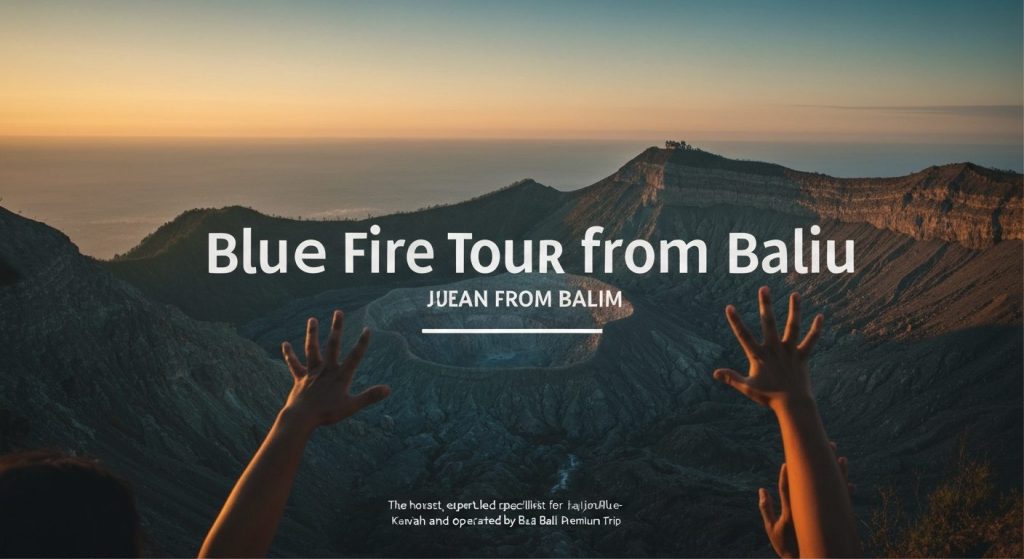
For those seeking the extraordinary, an Ijen blue fire tour from Bali offers an unforgettable encounter with one of Indonesia’s most unique natural phenomena. I’m Putu Gunawan, and as the East Java Logistics & Routes Analyst for Ijen Blue Fire at Bali Premium Trip, my job is to ensure every detail of your journey from Bali to Kawah Ijen is meticulously planned and transparent. We arrange private, safety-first night treks, ensuring you experience the electric-blue flames and the majestic turquoise acid lake with licensed Banyuwangi guides, all while we handle every logistic from your Bali pickup to the crater rim.
### The Unmistakable Call of Kawah Ijen’s Blue Fire
Imagine standing on a volcano’s edge, pre-dawn, watching electric-blue flames dance from cracks in the earth. This is the Ijen blue fire, a rare spectacle found only in a handful of places globally, and it’s the heart of the Kawah Ijen experience. It’s not lava; it’s ignited sulfuric gas, emerging from fissures at temperatures reaching up to 700°C and burning with an ethereal blue glow as it contacts the oxygen-rich air. This natural wonder, combined with the world’s largest acidic crater lake – a vast, shimmering turquoise expanse – makes Kawah Ijen a geological marvel that draws adventurers from across the globe.
But let’s be candid: this isn’t a casual stroll. Seeing the blue fire requires a midnight ascent, a trek into an active sulphur mining area, and adherence to strict safety protocols. The reward is immense, but the journey demands respect for the mountain and its conditions. We’re here to guide you through that reality, every step of the way.
### Your Definitive Ijen Blue Fire Tour from Bali: The Overnight Reality
An `ijen tour from Bali overnight` is not just a recommendation; it’s the only realistic and responsible way to experience the blue fire. Trying to complete a `bali to kawah ijen day trip` is possible on paper, but it is an exhausting, potentially unsafe endeavor that compromises the experience. You simply cannot see the blue fire in daylight, and the sheer travel time from Bali necessitates an overnight stay to allow for proper rest before the demanding pre-dawn hike.
Our approach centers on a `ijen 2 day tour from Bali`, designed to maximize your comfort, safety, and enjoyment of this incredible spectacle. It accounts for ferry schedules, drive times, and crucial rest periods, ensuring you’re as prepared as possible for the trek.
**Overnight vs. Same-Day: A Candid Comparison**
Here’s why we advocate for the overnight experience for your `kawah ijen tour from Bali`:
- Overnight (Recommended)
-
- **Departure from Bali:** Late evening (e.g., 6:00 PM – 8:00 PM).
- **Travel to Ketapang Ferry:** Drive from South Bali takes approximately 3-4 hours to Gilimanuk port.
- **Ferry Crossing:** Approximately 1 hour across the Bali Strait.
- **Arrival in Banyuwangi:** Late night/early morning.
- **Rest:** Brief, crucial rest at a Banyuwangi base hotel (provided).
- **Drive to Paltuding (Trailhead):** Around 1-1.5 hours, departing around midnight.
- **Trek to Crater:** Approximately 1.5-2 hours.
- **Blue Fire Viewing:** Pre-dawn, optimal darkness.
- **Sunrise at Lake:** Witness the turquoise lake at dawn.
- **Return to Banyuwangi:** Mid-morning for breakfast and check-out.
- **Return to Bali:** Arrive back in Bali late afternoon/early evening.
- **Energy Levels:** Manageable, with dedicated rest.
- **Experience:** Maximised blue fire viewing, sunrise, and safety.
- Same-Day (Not Recommended)
-
- **Departure from Bali:** Extremely early morning (e.g., 10:00 AM the *previous day* to account for travel and a few hours rest, or a near-impossible 4:00 PM departure for immediate hike).
- **Travel to Ketapang Ferry:** Same 3-4 hour drive.
- **Ferry Crossing:** Same 1 hour.
- **Arrival in Banyuwangi:** Late night.
- **Rest:** Minimal to none, often driving straight to Paltuding.
- **Drive to Paltuding:** Around 1-1.5 hours, departing around midnight.
- **Trek to Crater:** Approximately 1.5-2 hours.
- **Blue Fire Viewing:** Pre-dawn, if schedule allows.
- **Sunrise at Lake:** Possible, but rushed.
- **Return to Banyuwangi:** Mid-morning, often directly to the ferry.
- **Return to Bali:** Arrive back in Bali late afternoon/early evening, utterly exhausted.
- **Energy Levels:** Severely depleted, increased risk of fatigue-related issues.
- **Experience:** Rushed, stressful, potential safety concerns due to lack of rest.
As you can see, the same-day round trip from Bali is a logistical nightmare and a physical ordeal. It’s simply not what we recommend for a memorable or safe `bali ijen blue fire tour package`.
### The Journey from Bali to Kawah Ijen: Step-by-Step Logistics
Let’s walk through the actual journey for your `bali to ijen blue fire` experience, detailing how our `ijen tour transfer from Bali` handles every segment. This is the route I’ve mapped and refined countless times.
#### 1. Bali Pickup: The Starting Point
Your adventure begins with a late evening pickup directly from your accommodation in South Bali (e.g., Seminyak, Canggu, Ubud, Kuta, Denpasar, Sanur). Our experienced, English-speaking driver will arrive in a comfortable, air-conditioned vehicle. Departure times typically range between 6:00 PM and 8:00 PM, depending on your exact location in Bali. We prioritize your comfort for the significant drive ahead.
#### 2. The Drive to Gilimanuk Ferry Port
The drive across Bali to Gilimanuk, the westernmost port, takes approximately 3-4 hours. You’ll traverse the island in the quiet of the night, giving you a chance to rest or simply observe the changing landscape. Our drivers are seasoned professionals who know these routes intimately.
#### 3. Gilimanuk to Ketapang Ferry: Crossing the Bali Strait
Upon arrival at Gilimanuk, your driver will assist with ferry tickets. The `kawah ijen from ketapang ferry bali` connection is the vital link. The public car ferry operates 24/7, departing every 20-30 minutes.
* **Ferry Duration:** The crossing itself takes about 1 hour.
* **Ferry Experience:** It’s a large, multi-deck vessel carrying both people and vehicles. Basic amenities are available on board. This isn’t a luxury cruise; it’s a functional, essential part of the journey.
* **Ijen Ketapang Ferry Cost from Bali:** As of June 2026, indicative passenger tickets are very affordable, typically under US$1 per person. Vehicle costs vary but are also modest. These are typically included in our `ijen tour from bali all inclusive price` packages.
Upon disembarking at Ketapang Port in Banyuwangi, East Java, you’ll be met by our local Banyuwangi team or your driver will continue with you.
#### 4. Banyuwangi Base: A Brief Respite
Depending on the exact timing and your chosen itinerary, you’ll either head directly towards Paltuding or have a brief opportunity for rest at a simple, clean local hotel in Banyuwangi. This short break is invaluable before the physical demands of the trek.
#### 5. Drive to Paltuding: The Trailhead
Around midnight, or slightly after, you’ll begin the drive from Banyuwangi to Paltuding, the official starting point for the Kawah Ijen trek. This drive takes approximately 1 to 1.5 hours, winding through coffee plantations and rural landscapes. The air cools significantly as you ascend.
#### 6. The Midnight Ascent: Trekking to the Crater
At Paltuding, you’ll meet your licensed local Banyuwangi guide, who will provide headlamps and ensure you have all necessary gear, including your gas mask. After a quick registration process and safety briefing, the trek begins.
* **Distance:** The trail to the crater rim is approximately 3 kilometers (1.8 miles) long.
* **Elevation Gain:** You’ll ascend roughly 300-350 meters (1,000-1,150 feet).
* **Terrain:** The first 1.5 kilometers are the steepest, a steady uphill climb on a well-defined but sometimes loose dirt path. The latter half levels out somewhat.
* **Pace:** Your guide will set a manageable pace, allowing for breaks as needed. It typically takes 1.5 to 2 hours to reach the crater rim.
This is a moderately challenging hike in the dark. Sturdy hiking shoes are non-negotiable.
#### 7. At the Crater Rim & Descent to the Blue Fire
Reaching the crater rim is an achievement in itself. From here, you’ll get your first glimpse of the vast caldera, and if conditions are right, a faint blue glow in the distance.
* **Descent into the Crater:** To see the blue fire up close, you must descend into the crater. This path is steep, rocky, and can be slippery, especially in the dark. Your guide will provide a crucial safety briefing. The descent takes about 30-45 minutes.
* **The Spectacle:** Once down, you’ll witness the electric-blue flames firsthand. The air here is heavy with the smell of sulphur, and the sight is truly otherworldly. Sulphur miners, carrying heavy loads, will be at work around you. Maintain a respectful distance and give them right-of-way.
* **Gas Mask Importance:** This is where the gas mask becomes absolutely essential. Sulphur dioxide fumes can be intense and irritating, causing coughing and shortness of breath. Your guide will ensure you wear it correctly and at all times while in the lower crater.
#### 8. Sunrise at the Turquoise Lake
After experiencing the blue fire, you’ll ascend back to the crater rim as dawn breaks. This is where the landscape transforms dramatically. The turquoise acid lake, often obscured by darkness and sulphur clouds earlier, reveals itself in all its glory. Its vibrant, almost unnatural color is due to the high concentration of sulfuric acid and dissolved metals. This is a moment for reflection and photography, capturing the sunrise over this unique volcanic landscape.
#### 9. Return Hike & Breakfast
Once you’ve soaked in the sunrise views, you’ll begin the descent back to Paltuding. The return hike is easier, taking about 1 to 1.5 hours, and allows you to appreciate the mountainous scenery you couldn’t see in the dark. From Paltuding, our vehicle will take you back to Banyuwangi for a well-deserved breakfast.
#### 10. Return to Bali
After breakfast and a chance to freshen up, you’ll begin the journey back to Ketapang ferry port, cross back to Gilimanuk, and then be driven back to your accommodation in Bali. You can expect to arrive back in South Bali in the late afternoon or early evening, tired but with memories of an extraordinary adventure.
### Why Choose Bali Premium Trip for Your Kawah Ijen Tour from Bali?
Navigating the complexities of an `ijen blue fire tour from bali` requires local expertise, meticulous planning, and an unwavering commitment to safety. This is where Bali Premium Trip excels. We are not a faceless booking engine; we are a real Bali concierge service, deeply rooted in the local logistics of both Bali and East Java.
* **Expert-Led & Meticulously Planned:** We are the honest, expert-led specialist for Ijen blue-fire and Kawah Ijen crater tours. I, Putu, personally map these journeys, tracking ferry timings, drive distances, entrance fees, and seasonal closures. This ensures your chosen route aligns perfectly with the hours the blue fire is visible and that your `ijen tour from bali all inclusive price` covers all necessary logistics.
* **Private, Safety-First Treks:** Every `bali ijen blue fire tour package` we arrange is private. This means personalized attention, flexibility, and a focus on your group’s safety and pace. We equip you with high-quality gas masks and ensure you trek with licensed, vetted Banyuwangi guides who know the mountain intimately. Your safety is our paramount concern.
* **Comprehensive Logistics Handled:** From the moment our Bali team picks you up at your hotel to arranging your `ijen tour transfer from bali`, ferry tickets, park permits, and local guides, we handle every single logistic. You focus on the experience; we manage the journey.
* **Licensed Local Guides:** While Bali Premium Trip arranges your entire trip, the actual trek on Kawah Ijen is led by highly experienced and licensed local Banyuwangi guides. These individuals are experts on the volcano, its conditions, and the necessary safety protocols. They are indispensable for a safe and informed trek.
* **Transparency & Honesty:** We operate with complete transparency. Bali Premium Trip arranges these tours; we do not own the mining concession or hold the park permit ourselves. We facilitate your access and ensure a seamless experience through our network of trusted local partners. Our indicative pricing for a comprehensive `ijen 2 day tour from bali` typically ranges from US$150-250 per person, depending on group size, pickup location, and specific inclusions. This is an indicative range last verified June 2026; confirmed pricing will be provided upon enquiry for your specific trip.
* **Commitment to Ethical Travel:** We ensure fair compensation for our local guides and drivers, promoting sustainable tourism practices within the communities we operate. Because Ijen Blue Fire is operated by Bali Premium Trip, you book directly with our own reservations team at transparent, published rates — with no third-party markup or hidden commission.
### Planning Your Bali Ijen Blue Fire Tour Package
To maximize your experience, consider these practical aspects:
#### Best Time to Visit
The dry season (April to October) generally offers the most stable weather conditions, with clearer skies and less chance of rain, which can make the trek more challenging and obscure views. However, Kawah Ijen is accessible year-round, provided there are no volcanic activity alerts or park closures. Always confirm current conditions and park status with us when planning your trip.
#### What to Pack
* **Warm Layers:** It gets cold at the trailhead and on the mountain (temperatures can drop to 5-10°C / 40-50°F). Pack a jacket, fleece, hat, and gloves.
* **Sturdy Hiking Shoes:** Essential for the rocky, sometimes slippery terrain.
* **Headlamp or Flashlight:** While guides provide headlamps, a personal backup is always good.
* **Water and Snacks:** Stay hydrated and energized.
* **Small Backpack:** To carry your essentials.
* **Rain Gear:** A light rain jacket or poncho is advisable, especially outside the dry season.
* **Personal Medications:** If needed.
* **Camera:** For capturing the spectacular views.
* **Face Mask/Buff:** In addition to the provided gas mask, a buff can offer extra protection from dust and sulphur fumes.
#### Physical Requirements
The Kawah Ijen trek is moderately challenging. You should have a reasonable level of fitness and be comfortable with uphill walking in the dark. Individuals with respiratory issues, heart conditions, or pregnant women should consult their doctor before undertaking this trek. Children over 10 years old with good physical condition can participate, but parental discretion and supervision are crucial.
#### How to Get to Ijen from Bali
The most efficient and worry-free `how to get to ijen from bali` is through an organized tour like ours. We provide door-to-door service, managing all transport from your Bali hotel, across the ferry, to the Ijen trailhead, and back. Attempting this journey independently can be complex, especially with the midnight timing and need for local guides.
#### Combining with Other Destinations
The strategic location of Banyuwangi makes it an excellent gateway for further exploration of East Java. Many travelers combine their `ijen blue fire tour from bali` with other iconic Indonesian experiences:
* **Mount Bromo:** A classic combination. After Ijen, you can continue your journey to Cemoro Lawang, the gateway to Mount Bromo, for another unforgettable sunrise volcanic experience.
* **Tumpak Sewu Waterfall:** Often combined with Bromo, this magnificent waterfall near Lumajang offers a different natural spectacle.
* **Surabaya or Malang:** These major cities in East Java serve as hubs for onward travel or as starting points for exploring other parts of Java.
We can help you craft a multi-day itinerary that seamlessly links these destinations, arranging all transfers and accommodations.
### Ijen Blue Fire Tour Options from Bali: Understanding Your Choices
We primarily advocate for the `ijen 2 day tour from bali` as the optimal choice for seeing the blue fire safely and comfortably. However, it’s worth understanding the alternatives and their implications.
#### The Recommended: Overnight 2-Day Tour
This is the `bali ijen blue fire tour package` we’ve detailed above. It involves a late evening departure from Bali, an overnight stay (even if brief) in Banyuwangi, the midnight trek, and then the return to Bali the following evening. This structure allows for essential rest and provides the best chance to fully appreciate both the blue fire and the sunrise over the crater lake. It minimizes exhaustion and significantly enhances safety.
#### The Exhausting: Same-Day Round Trip (Not Recommended)
A `ijen from bali day trip` or `bali to kawah ijen day trip` implies leaving Bali in the late afternoon/early evening, driving straight to the ferry, crossing, driving straight to Paltuding, doing the trek, and then immediately turning around for the return journey to Bali. This means roughly 20-24 hours of continuous travel and trekking with almost no sleep. It’s a grueling schedule that can lead to severe fatigue, making the challenging trek even more difficult and potentially unsafe. We do not offer this option as it compromises the quality and safety of the experience.
#### Custom Itineraries
If you have specific needs or wish to combine Ijen with other destinations like Bromo or Tumpak Sewu, we can tailor a custom itinerary. Our team is adept at creating bespoke `bali to ijen blue fire` journeys that align with your preferences and schedule.
The journey to Kawah Ijen is an expedition, not just a trip. It’s a chance to witness nature at its most raw and spectacular, to challenge yourself, and to create indelible memories. With Bali Premium Trip, you gain a partner who understands the terrain, the logistics, and the importance of a safe, well-organized adventure.
Ready to embark on this extraordinary journey?
[Plan Your Trip Now with Bali Premium Trip](/contact-us/)
### Frequently Asked Questions
### Can children do the Ijen Blue Fire trek?
Children aged 10 and above, who are physically fit and accustomed to hiking, can typically participate in the Ijen Blue Fire trek. However, parental discretion is crucial, as the hike is moderately challenging, involves a midnight start, and requires wearing a gas mask in the crater. Younger children or those not used to strenuous activity may find it too difficult.
### What are the gas masks for?
Gas masks are absolutely essential when descending into the Ijen crater to see the blue fire. They protect you from inhaling high concentrations of sulphur dioxide gas, which is released naturally from the volcano. Without a mask, the fumes can cause severe coughing, eye irritation, and difficulty breathing. Your licensed guide will ensure you wear it correctly.
### Is Kawah Ijen dangerous?
Kawah Ijen is an active volcano and a working sulphur mine, so it carries inherent risks. The primary dangers are exposure to toxic sulphur gases, the possibility of volcanic activity (though closely monitored), and the challenging terrain of the trek, especially the steep descent into the crater. However, with a licensed guide, proper safety equipment (like gas masks), adherence to park regulations, and appropriate physical preparation, the risks are significantly mitigated. We prioritize your safety above all else.
### What happens if the park is closed?
Park closures at Kawah Ijen can occur due to heightened volcanic activity, extreme weather conditions, or maintenance. In such rare events, your safety is our priority. If the park closes before your trek begins, we will inform you immediately and offer alternative activities or a full refund for the Ijen portion of your trip, as per our terms and conditions. If a closure occurs during the trek, your guide will lead you to safety following established protocols.
### What is the best time of year to visit Ijen?
The best time to visit Kawah Ijen is generally during the dry season, which runs from April to October. During these months, the weather is typically more stable with less rain, leading to clearer skies for stargazing, blue fire viewing, and sunrise over the lake. While possible year-round, the wet season (November to March) can bring rain, making the trails muddier and more challenging.
Don’t hesitate to reach out to the Bali Premium Trip reservations team via WhatsApp or email for a tailored Bali-to-Ijen itinerary and quote that perfectly matches your travel plans.
[Plan Your Adventure: Contact Us Today!](/contact-us/)